
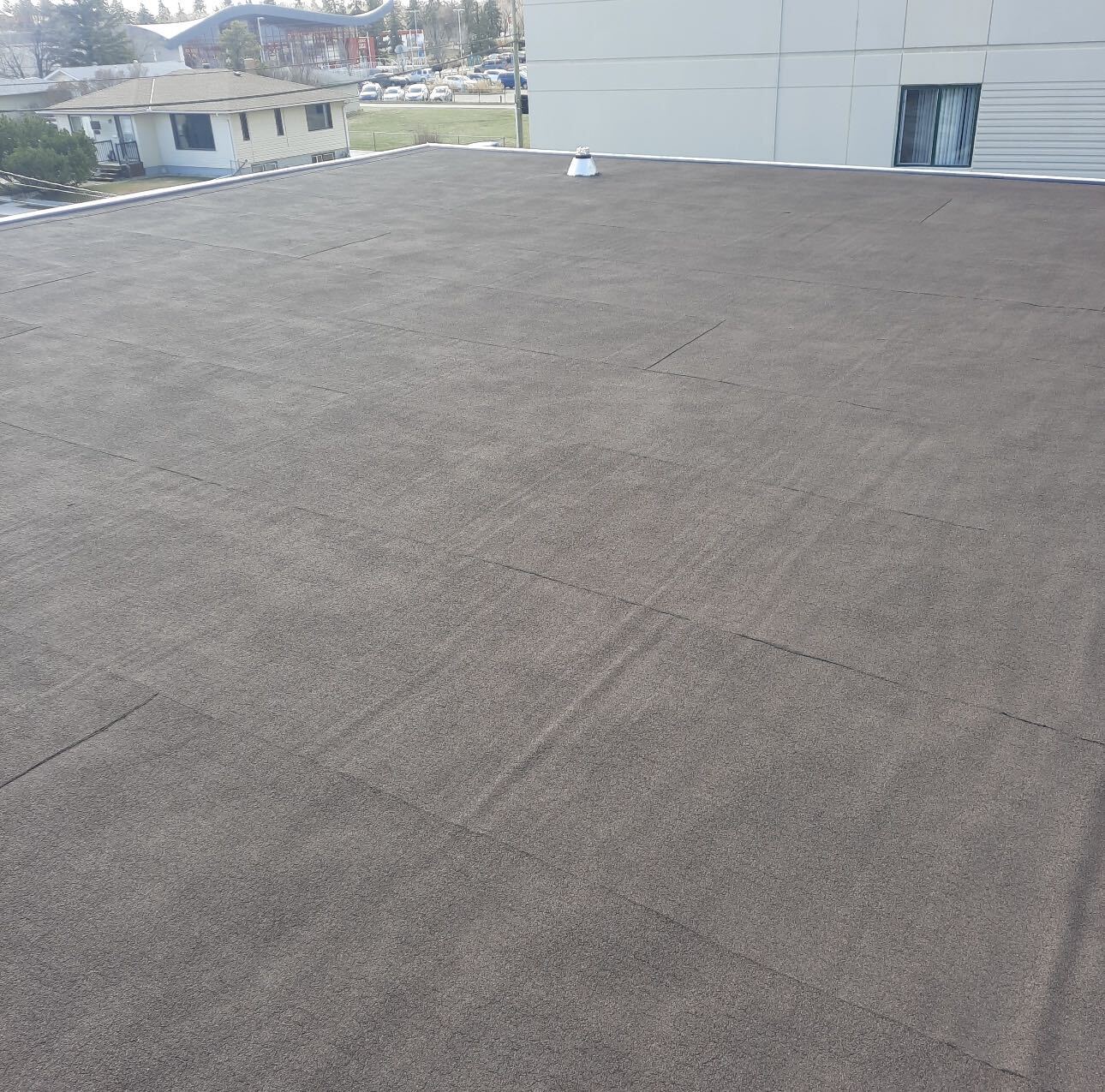
Seams and laps
The single most common failure. Adhesion fails, the lap lifts, and there's a direct path into the assembly.
Water almost never enters where it appears inside. Patching the ceiling stain's nearest roof area is how buildings end up paying for the same leak three times. We trace it properly first.
Why it's not obvious
On a flat roof, the entry point and the interior symptom can be metres apart — sometimes on a different part of the building entirely.
Once water gets through the membrane it doesn't fall straight down. It runs along the top of the vapour barrier, tracks across the deck, follows a steel flute or a seam in the concrete, and finally finds a penetration — a conduit, a fastener, a light fitting — to come through. That's the spot you see from inside.
This is why "we patched around the stain and it's still leaking" is such a common story, and why the first hour of a repair should be spent finding the source rather than opening the roof at the most convenient point.
Where flat roofs actually fail
The single most common failure. Adhesion fails, the lap lifts, and there's a direct path into the assembly.
Parapets, curbs and edge metal move constantly with temperature. When a termination lets go it's rarely visible from below.
Vents, stacks, conduit, mechanical curbs and pitch pockets. Every new roof-top item another trade installs is another potential entry point.
Blocked drains create ponding; failed drain flashings leak directly into the building at the lowest point on the roof.
Dropped tools, hail, foot traffic on a cold membrane. Small, easy to miss, and perfectly capable of soaking an insulation field.
Deck movement and thermal cycling tear membrane over structural joints — a straight-line split that opens further each winter.
Repairs we won't sell you: if the insulation is saturated across a wide area, or the membrane is failing in several places at once, a patch is money spent to delay a decision. We'll say so and quote the replacement instead — see installation & replacement.
Prairie hail bruises membrane without necessarily breaching it. The damage is often invisible from the ground and shows up as a leak a season or two later — by which point linking it to the storm is much harder.
If there's been significant hail or wind in your area, a documented post-event inspection is worth having whether or not you can see a problem. It establishes the roof's condition at that point in time, which matters if you later need to make a claim.
Repair pricing depends on what failed, how much of it there is, and how much investigation the leak needs before anyone can fix it with confidence. A single failed lap is a very different job from tracing a leak across a 30,000 sq ft roof with mechanical everywhere.
Questions
Because water travels. Once through the membrane it runs along the vapour barrier, tracks across the deck and follows a steel flute or seam until it finds a penetration to come through. The interior symptom marks the exit, not the entry.
Emergency stabilization, yes — a leak doesn't wait for spring, and stopping water entering the building is always possible. Permanent repairs are temperature-dependent because adhesion and membrane handling are affected by cold. We'll stabilize now and schedule the proper repair when conditions allow, and we'll be clear about which one you're getting.
It comes down to whether the membrane has service life left and whether the insulation is dry. Localized failure on a sound roof is a repair. Widespread failure, or water through the insulation across a large area, is a replacement. Coring the assembly settles it — guessing from the surface doesn't.
Yes, and most of our repair work is exactly that. We'll identify the existing system and repair it in kind. Note that repairs by a third party can affect an existing manufacturer warranty — worth checking your documentation, and we'll flag it if we spot it.
Yes. Selling a patch on a roof that's finished is an easy sale and a bad outcome — you spend money, the problem returns, and you've lost time you could have spent budgeting properly. We'd rather quote the replacement and be right.
Next step
Inspection, written findings, and honest options. If water is coming in right now, call instead.