
The insulation is wet
Once water is in the insulation, patching the membrane above it changes nothing. We core the assembly to find out rather than guess from the surface.
A new roof is one of the largest single line items a building owner signs off on. You should be able to see exactly what you're buying — the assembly, the scope, the schedule — before anything comes off.
First question
Sometimes the answer is no, and we'll tell you. A roof with service life left and a localized problem is a repair, not a capital project.
Once water is in the insulation, patching the membrane above it changes nothing. We core the assembly to find out rather than guess from the surface.
Multiple splits, widespread blistering or seams letting go in several places means the membrane is at end of life, not damaged in one spot.
When the annual repair bill starts approaching a fraction of replacement cost, you're renting a roof at a bad rate.
Localized failure on an otherwise sound membrane with years left. See repair & leak investigation.
Hail or wind damage confined to a section can often be cut in and repaired without touching the rest of the field.
Age alone doesn't decide it. A well-maintained 22-year-old roof can outlast a neglected 14-year-old one. Condition decides, not the calendar.
A flat roof is not one product, it's a stack — and most failures come from the layers you can't see rather than the membrane you can.
An overlay — installing over the existing assembly — is cheaper, faster and produces far less waste. It's a legitimate option when the existing roof is dry, the deck is sound, and code allows the additional layer.
It is the wrong option when there's moisture in the assembly. Covering wet insulation traps the water, and you've paid to bury a problem that will surface again with less of your budget left to deal with it. We core the roof and tell you which situation you're actually in.
Ask any contractor proposing an overlay: did you core the assembly, and what did you find? If the answer is vague, that's your answer.
On weather: membrane installation is temperature and moisture dependent. There are conditions in an Edmonton winter where a proper install simply is not possible, and we'll say so rather than install something that fails in three years. Emergency stabilization, on the other hand, happens whenever you need it.
Our own work
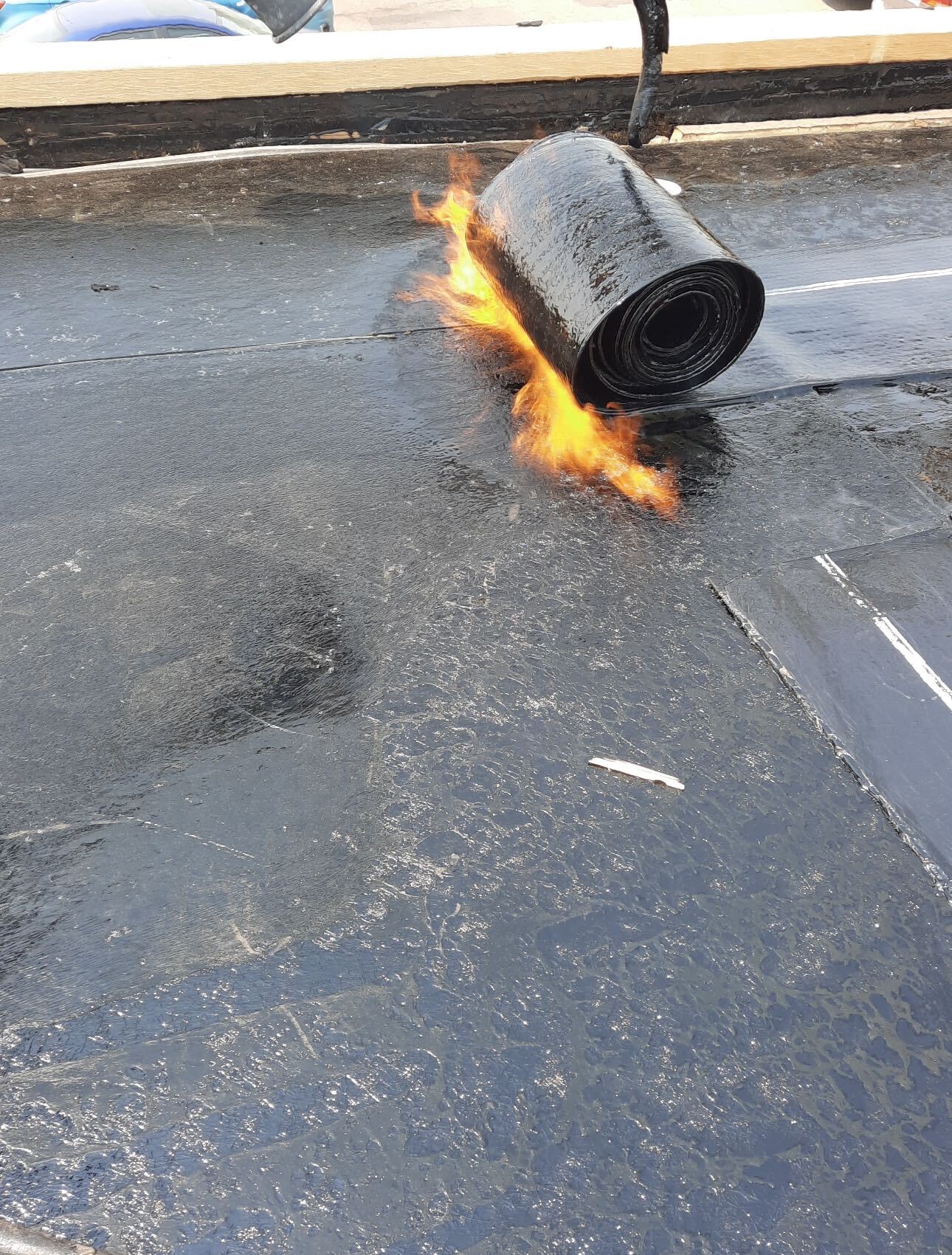
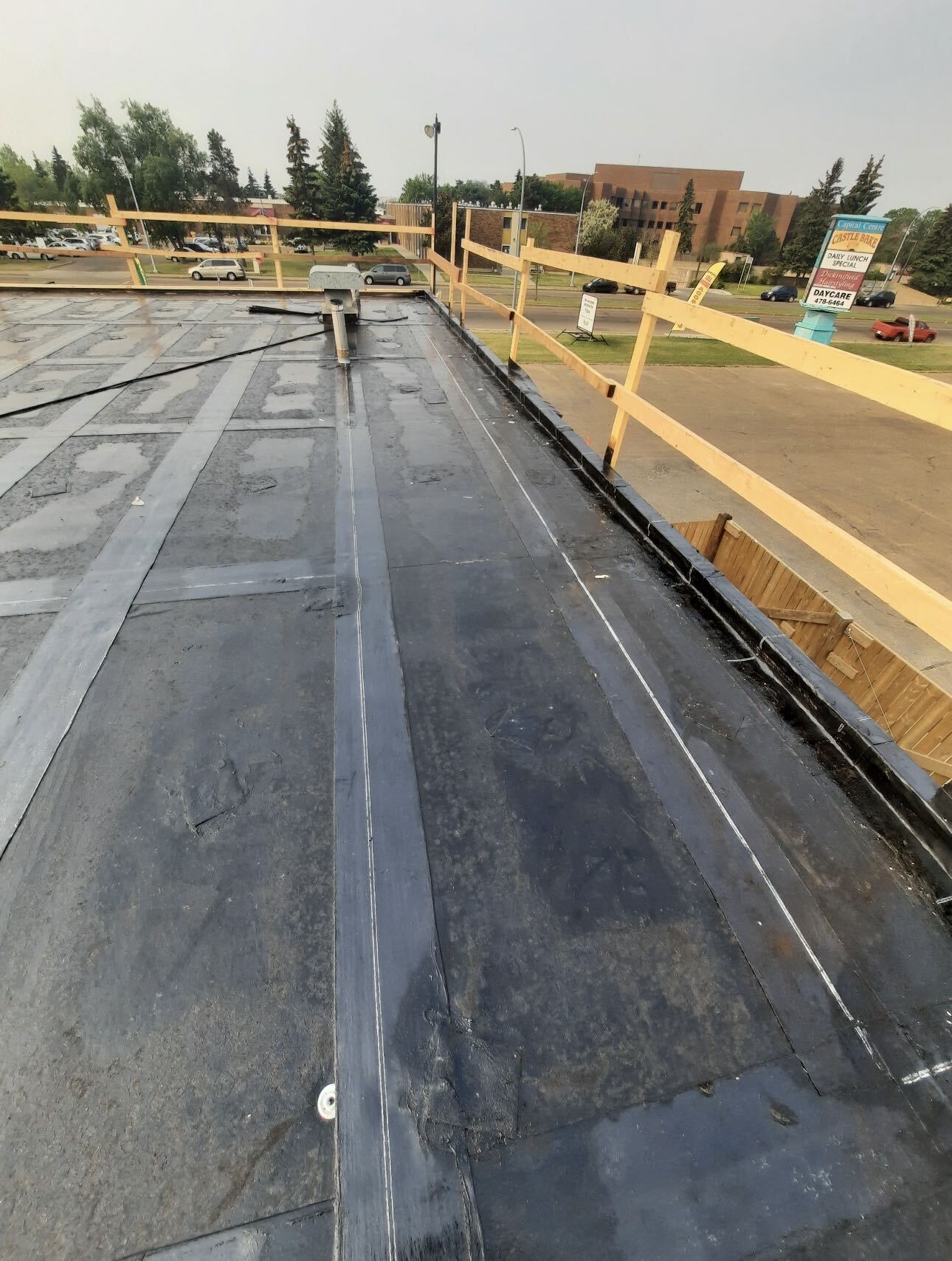
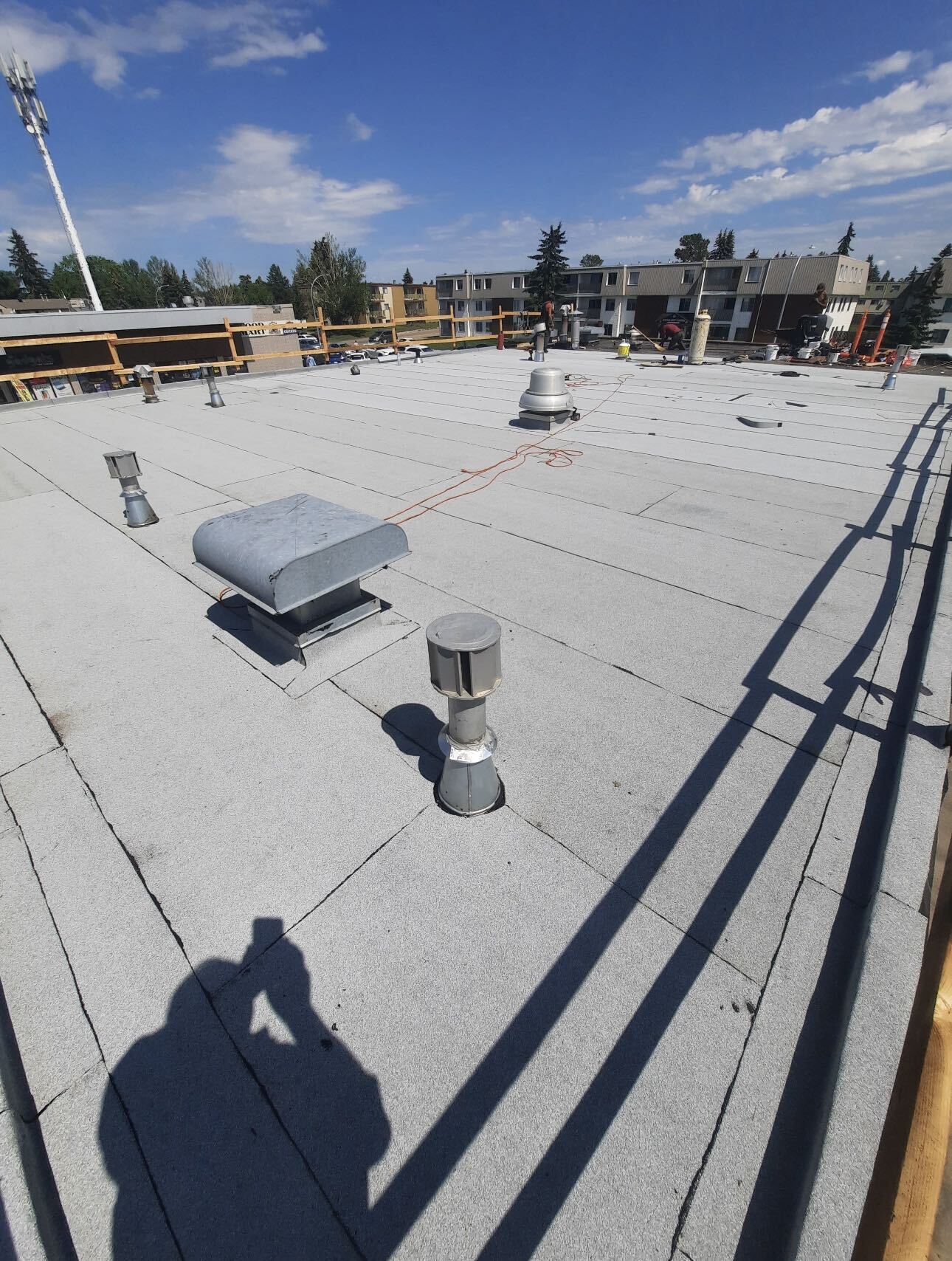
Real iRoof jobs — no stock imagery.
Questions
It depends on roof area, access, deck condition and weather windows. A straightforward mid-size commercial field is usually measured in weeks rather than months. You get a scheduled window in the quote, and we tell you immediately if weather moves it.
Almost never. Most of our commercial work happens on occupied buildings. Staging, access and the noisiest operations get planned around your hours, and we coordinate anything affecting tenants in advance.
We only open what we can close. The roof is tied in watertight at the end of every working day, so an overnight change in weather doesn't put water into your building. Schedules can move; watertightness doesn't.
Yes, where the scope requires them. Permit requirements and any code-driven insulation upgrades are identified during the assessment so they're in the quote rather than appearing later as a surprise.
Two, and they're different. The manufacturer warranty covers the membrane itself; our workmanship warranty covers the installation, which is where most failures originate. Both are issued in writing. Note that manufacturer coverage typically requires documented maintenance to stay valid — see maintenance programs. Our workmanship warranty runs 5 years.
Next step
Free assessment, itemized scope, no obligation.